
If you’ve searched for your own business and found a competitor ranked above you, one you know isn’t better, this checklist is for you.
Local SEO isn’t a mystery. It’s a set of signals Google uses to decide which businesses are trustworthy, relevant, and worth showing. Strong, consistent signals mean you show up. Weak or incomplete ones mean someone else gets the call.
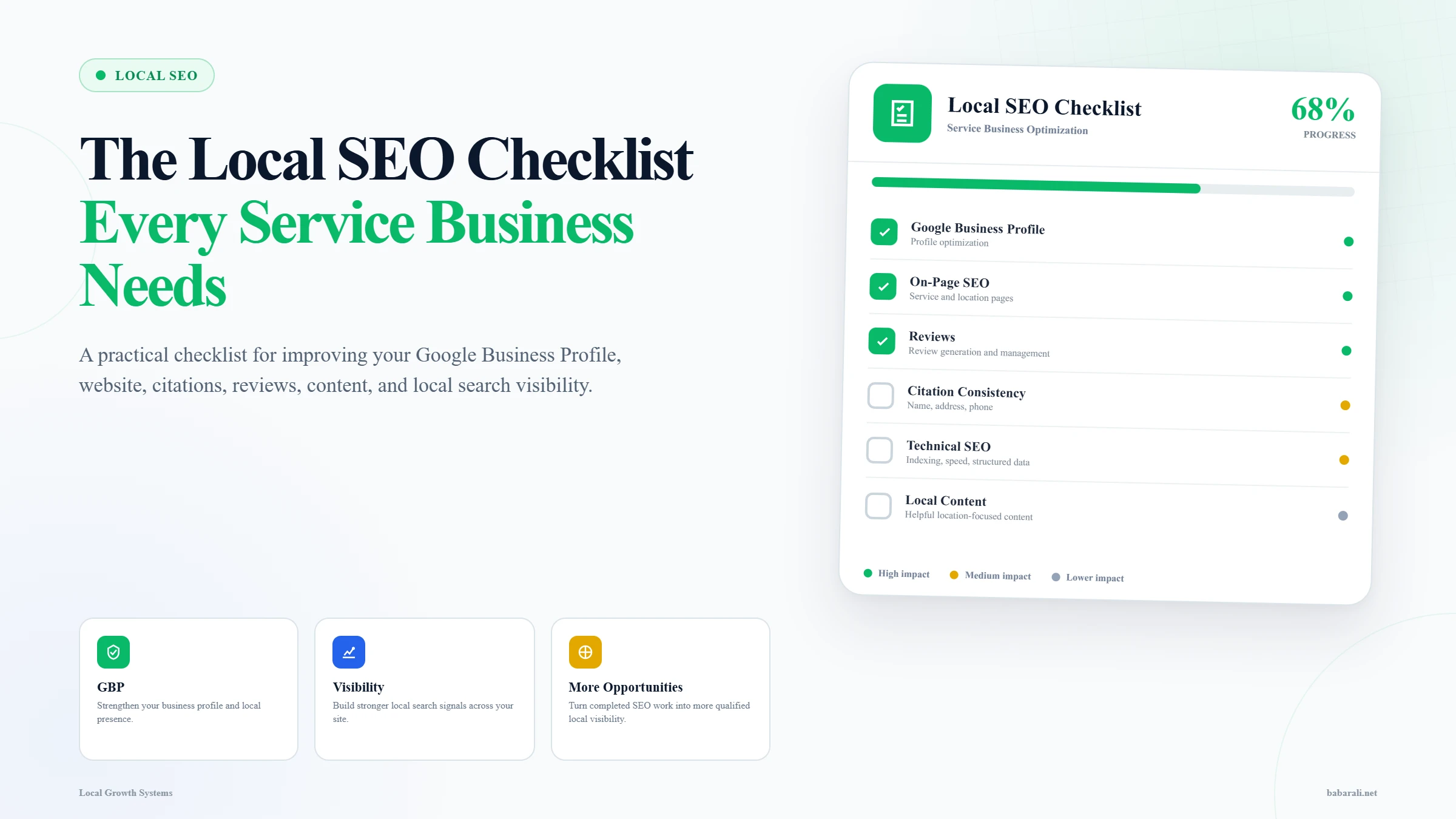
This checklist covers every layer of local search visibility: Google Business Profile, on-page SEO, technical health, citations, content, and more. Each task is weighted by real-world impact. The green dot tasks are the ones that move the needle most.
These two sections have the highest concentration of high-impact tasks. If you’re starting from scratch or have limited time, begin there.
Your browser remembers where you left off, so you can work through this over days or weeks without losing your place.
Completing ten low-priority tasks won’t move your score as much as completing three high-impact ones. The percentage shown is a measure of SEO strength, not just task count.
What to do after you finish the checklist
Completing every task on this list puts you ahead of the majority of local businesses in most markets. But checking boxes is only part of the equation. Here’s what matters next.
1. Fix the high-impact gaps first
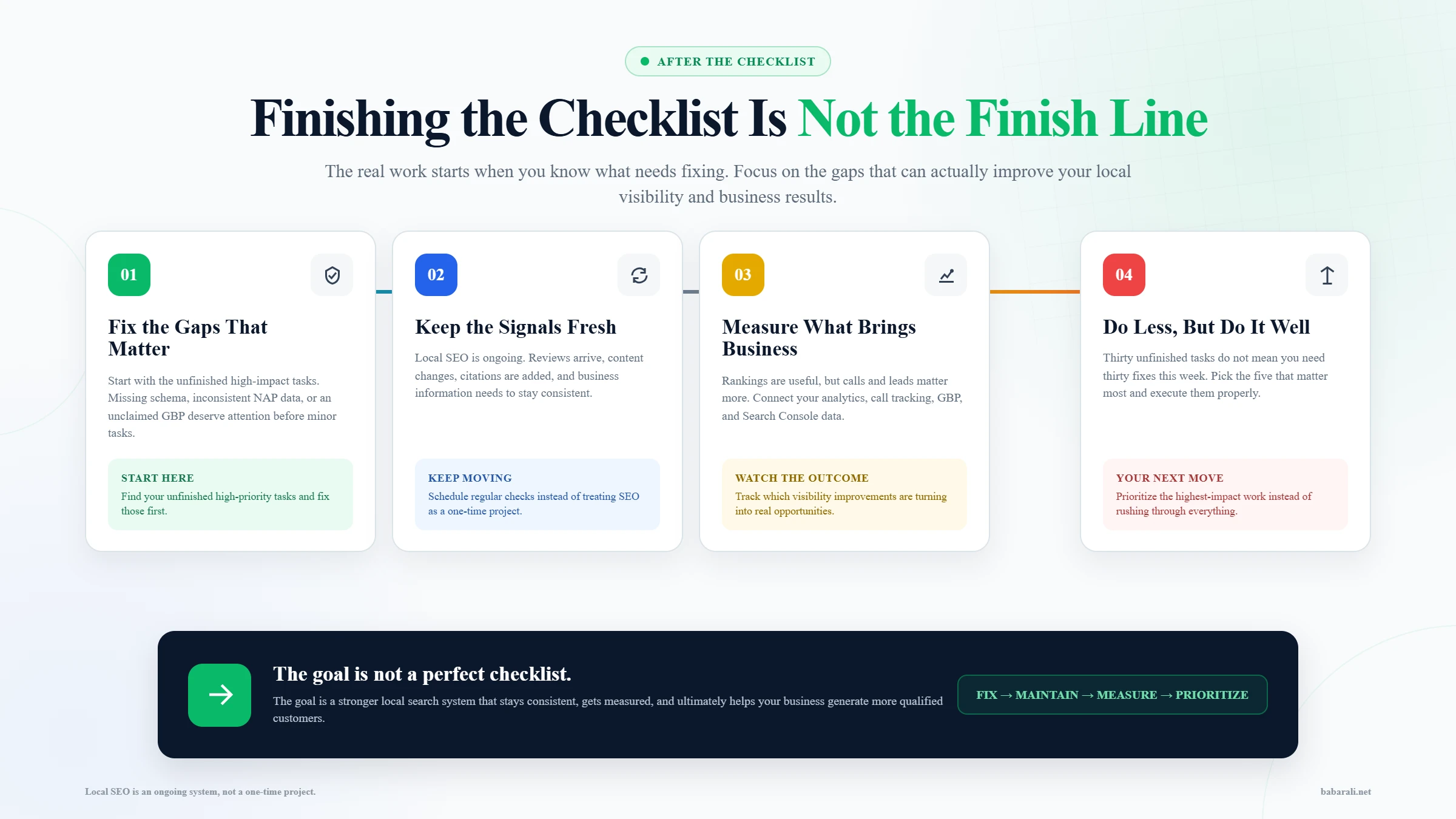
Look at which high-priority tasks (green dots) you haven’t completed. Those are your biggest opportunities. A missing schema markup, inconsistent NAP information, or an unclaimed Google Business Profile can hold back an otherwise solid local SEO strategy. One fix in the right place often produces more visible results than a dozen smaller tweaks.
2. Treat local SEO as an ongoing system, not a one-time project
The businesses that consistently appear at the top of local search aren’t just the ones who optimised once — they’re the ones who keep their signals fresh. Reviews come in regularly. Content gets updated. New citations get added. Google notices consistency over time, and it rewards it.
3. Track what’s actually driving calls and leads
Getting visibility is step one. Understanding which parts of your visibility are generating real business is step two. Set up call tracking, connect your Google Business Profile to Google Analytics, and check your Search Console data at least monthly. The goal isn’t rankings — it’s customers.
4. Don’t try to do everything at once
If you’ve identified 30 tasks you haven’t completed, don’t attempt all of them this week. Pick the five highest-impact items, execute them properly, and move on. Rushed optimisation tends to produce inconsistent signals — exactly what you’re trying to avoid.
Frequently asked questions
How long does local SEO take to produce results?
Most businesses start seeing meaningful movement within 60 to 90 days of completing the high-priority items on this list, assuming the market isn’t unusually competitive. Google Business Profile optimisation tends to show results fastest. Technical fixes, citations, and content take longer to compound but are more durable.
Do I need to complete every task on this checklist?
No. The checklist is comprehensive by design. It covers everything that can influence local search visibility. In practice, completing the high and medium impact tasks puts you in a strong position. Some lower-priority tasks (like certain directory listings) are worth doing eventually but won’t move the needle significantly on their own.
What’s the most important section?
Google Business Profile, followed by on-page SEO fundamentals. These two areas have the most direct relationship with how and where your business appears in local search results. If you’re short on time, start there and work outward. If you haven’t claimed or configured your profile yet, start with this Google Business Profile setup guide.
Can I do this myself or do I need to hire someone?
Most of these tasks are doable without technical expertise. Setting up Google Search Console, optimising your GBP, claiming directory listings, and improving your on-page content are all things a business owner or an in-house team member can handle with some time and attention. The technical SEO section, particularly site speed, HTTPS, and structured data, is where hiring a specialist tends to pay off fastest. If you’re managing your profile yourself, learning how to create effective Google Business Profile posts, troubleshooting Google reviews that aren’t showing, and improving your Google Business Profile description can help strengthen your local presence.
Done the checklist and want a second opinion?
If you’ve worked through this list and you’re still not seeing the visibility your business deserves, the issue is usually one of three things: a gap you’ve missed, a competitor doing something you haven’t spotted, or a technical issue that isn’t obvious from the surface.
A growth audit looks at all of it. No pitch, no fluff — just a clear picture of where you stand and what needs to change.